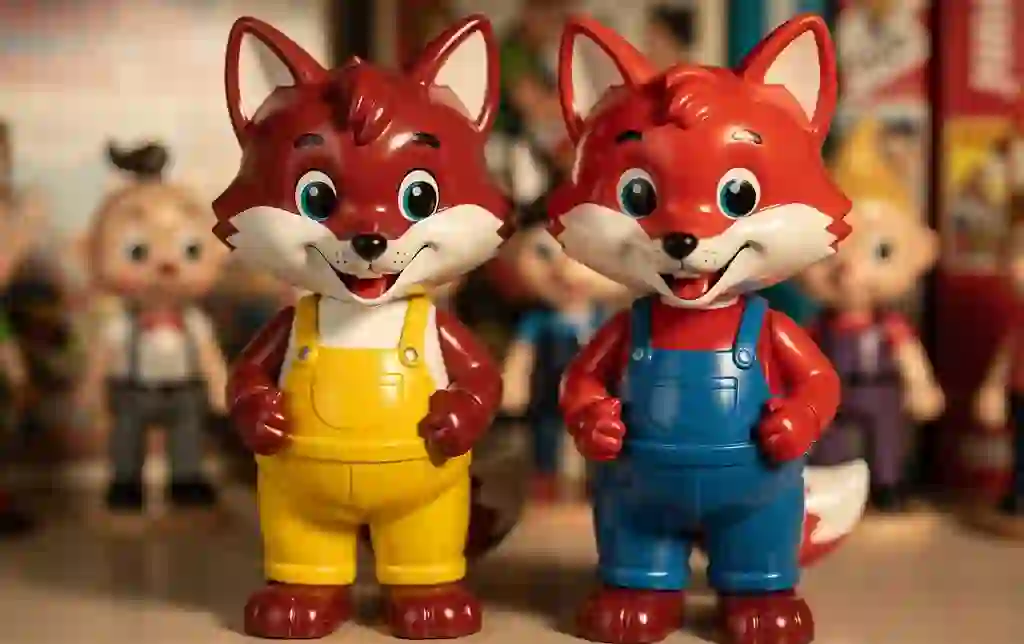
Are you searching for Fix Und Foxi Figuren and wondering whether the bright fox on a flea-market table is an authentic collectible, a later licensed toy, or a damaged copy? That uncertainty can lead to an overpayment, a wrong date, or an incomplete set. This practical guide shows how to recognize the characters, separate common figure types, check markings and condition, judge asking prices, and care for a piece before you buy.
What are Fix Und Foxi Figuren?
Fix Und Foxi Figuren are three-dimensional toys and collectibles based on characters from the German comic universe created by Rolf Kauka. The phrase is German: “Figuren” means “figures,” and collectors use it for everything from small molded-plastic toys to larger soft-bodied figures and promotional novelties. A figure can be a plaything, a display piece, a licensed giveaway, or a part of a wider Kauka collection.
The two foxes are the best-known characters, but they are not the only figures collectors look for. Lupo, Lupinchen, Grandma Eusebia, Uncle Fax, and Professor Knox are part of the familiar cast, while characters from related Kauka stories may appear alongside them in older toy listings and collections. That distinction matters: a figure can belong to Kauka’s broader comic world without being a Fix-and-Foxi character in the narrow sense.
There is no single all-purpose checklist that covers every model, maker, country, and year. Treat each object as an item to identify, not as a piece whose date and value can be inferred from its character alone. The fastest starting point is to record the character, material, height, construction, marks, packaging, and any unusual feature.
Why do these figures attract collectors?
Fix and Foxi connect a well-known comic property with the history of German popular culture. The official Rolf Kauka’s Comicosmos history dates the characters’ first appearance to 1953, in issue 6 of Till Eulenspiegel 3. The Wilhelm Busch Museum’s exhibition archive documents original artwork, publication material, and artists who helped shape the series 1.
That history gives the toys context, but age alone does not make an object rare or valuable. Collectors often enjoy a figure because it recalls a comic, a childhood memory, a particular character, or a distinctive manufacturing style. Others focus on completing a group, finding an unusual pose, or tracing how the comic’s look changed over time.
For a beginner, Fix Und Foxi Figuren are also approachable because the basic cast is easy to recognize. You can start with one character, one material, one maker, or one decade rather than trying to buy every Kauka item at once. A narrow collecting goal makes research, storage, and spending easier to control.
A short history of the characters and their look
Rolf Kauka’s foxes began in a comic setting before becoming the stars of their own wider world. The official rights-holder’s history says the pair first appeared in Till Eulenspiegel in 1953 and that the early drawings looked more naturalistic than later cartoon-style versions 3.
That evolution is useful when you compare a collectible with a comic illustration. The official timeline describes a more stylized look by 1971, associated with artist Walter Neugebauer 3. The Wilhelm Busch Museum record documents work by several artists, including early and later material, so a difference in line, face, or proportions does not automatically prove that a figure is fake 1.
A toy may also simplify a character for practical reasons. A molded nose, flattened tail, broad feet, or reduced clothing detail can result from the limits of a small mold rather than from an inaccurate design. Compare a figure with a reference image from a similar period and character version; do not judge it only against a modern logo or a recent animation still.
Which characters should you know before collecting?
Knowing the cast helps you identify what you are looking at and avoid confusing similar-looking characters. The official character profiles from Rolf Kauka’s Comicosmos provide a reliable starting point for the central ensemble 1. Use the table as a recognition guide, then compare the object with an image from the relevant comic period.
| Character | Role in the comic world | Helpful recognition clue | What collectors may seek |
|---|---|---|---|
| Fix | One of the twin foxes | Often shown in yellow clothing; compare the hair tuft and face with a period reference | A figure that pairs with Foxi or has a distinctive accessory |
| Foxi | Fix’s twin brother | Often shown in blue clothing; small facial and hair differences can separate him from Fix | A matching brother figure or a different pose |
| Lupo | A wolf and frequent comic companion | Long muzzle and wolf-like ears; the official profile highlights his love of idleness and clever schemes | A stand-alone Lupo, a comic scene, or a version with a prop |
| Lupinchen | A lively member of the wider family circle | Fashion-conscious, energetic character; clothing details can vary by design | A less common supporting-character figure or a complete group |
| Grandma Eusebia | The spirited grandmother of Lupo and Lupinchen | Often shown as an older, distinctive figure; use the source illustration rather than memory alone | A character that rounds out a family display |
| Uncle Fax | Fix and Foxi’s strict but caring guardian | A grown-up fox character; check clothing and accessories against the version | A guardian figure paired with the twins |
| Professor Knox | An inventive, absent-minded professor | The official character material identifies him as the inventor in the group; designs may emphasize his role | A figure with an invention, vehicle, or science-themed prop |
| Pauli and other Kauka characters | Related characters from the broader publishing universe | They are connected to Kauka comics but are not interchangeable with the central fox cast | A broader Rolf Kauka display rather than a strict Fix-and-Foxi-only set |
Figures from one release do not always share the same scale, paint style, or level of detail. A family display can still look cohesive if you group pieces by character, theme, or era instead of forcing a perfect size match. When a listing calls every Kauka character a “Fix and Foxi figure,” read the description carefully and verify the character yourself.
What kinds of Fix Und Foxi Figuren can you find?
Collectors encounter several broad formats. Some pieces were made for play, some were designed as small promotional toys, and others were produced mainly to stand on a shelf. A type can overlap with another—for example, a promotional figure may also have a wind-up action—so use the categories as a practical guide, not as a rigid catalogue.
| Figure type | Common construction or feature | Useful clues | Questions to ask before buying |
|---|---|---|---|
| Soft or hollow figure | Flexible, rubber-like or hollow body; some examples may have a squeeze or squeak feature | Check whether the body is still pliable, whether seams look original, and whether the sound mechanism works | Is the material sticky, cracked, hardened, or repaired? Does the seller show the base and back? |
| Small molded figure | Hard plastic or PVC-style collectible, often made to stand or sit | Look for a stable base, molded detail, paint edges, and marks underneath | Is it a complete figure, or has an accessory or base broken off? |
| Moving or mechanical toy | May include a rolling base, wind-up action, moving arms, or another play feature | Test only if safe; inspect the mechanism and do not force stuck joints | Does the feature work smoothly, and is it original to the figure? |
| Promotional figure | Licensed toy associated with a campaign, meal, magazine, or retailer | Packaging, printed copyright text, and a molded licence mark can help narrow the date | Does the year on the item match the packaging and the seller’s claim? |
| Miniature or accessory figure | Small-scale figure, charm, topper, or item attached to another product | Size and attachment points are important; compare both sides with reference photos | Is it a complete toy, a loose accessory, or a part of a larger set? |
| Paper or build-it-yourself character | Printed cut-out, fold-up figure, or comic insert | Paper stock, fold lines, printed title, issue number, and condition matter | Is it an original insert, a later reprint, or a home-made copy? |
| Plush character | Fabric body with stuffing, embroidery, or stitched details | Examine the tag, seams, fabric, and any surviving label | Are the seams sound, and is the licensing or maker tag still present? |
The table gives you a vocabulary for talking with sellers and sorting a collection. If a figure combines two types, describe both: for example, “small molded figure with a rolling skateboard” is clearer than “vintage toy.” Specific descriptions help you compare like with like and reduce mistakes when you save search results.
How do older figures differ from later licensed toys?
Older toys and later promotional pieces may share the same character names while feeling very different in the hand. An older figure may have a simpler sculpt, softer material, hand-painted details, or visible signs of aging. A later promotional toy may use brighter colors, a moving feature, or printed licence information designed for a mass-produced campaign.
Do not assume that “old-looking” means old. Newer toys can use intentionally retro styling, and a worn item may have been made more recently than it appears. Instead, gather several clues: the material, construction method, mould seams, markings, packaging, known campaign information, and a close visual comparison with a documented example.
A recurring search term is the Heimo figure, and collectors may also see maker names such as John Thermoplastik, ELA, or Fischer attached to vintage listings. Treat a maker name in a listing as a lead, not as proof. Ask for a clear photo of any moulded logo or mark, and distinguish a verified stamp on the object from a seller’s guess about its origin.
Some later pieces carry a copyright or licence stamp, while a loose older figure may have no packaging at all. The absence of a box does not prove a figure is fake, and the presence of a box does not prove the toy inside belongs to it. Check the object, the packaging, and the story together.
How can you identify an authentic figure?
Start with the object itself, not the asking price or the seller’s use of words such as “rare,” “original,” or “museum quality.” A good identification combines visual comparison, physical inspection, markings, provenance, and a plausible date. One clue may be misleading; several clues that agree are much stronger.
Use this step-by-step check:
- Identify the character. Compare the face, ears, clothing, body shape, and accessory with a comic or official character image. Look closely if the seller has confused Fix with Foxi or Lupo with another wolf-like character.
- Measure the figure. Record its height and, if useful, the width of the base. Dimensions help separate a miniature from a larger play figure and make later comparisons repeatable.
- Describe the material. Note whether it feels flexible, hollow, dense, brittle, fabric-covered, or paper-based. Do not use solvents or sharp tools to test it.
- Inspect the whole object. Ask for front, back, side, base, and close-up photos. Look for seams, paint boundaries, repairs, missing accessories, and any difference between left and right sides.
- Read every mark. Photograph copyright text, country-of-origin text, maker symbols, model numbers, and date codes. A mark may support an identification, but it may refer to a licence or mould rather than an exact production year.
- Compare with a documented example. Match the same character, pose, scale, and material. A photo of a similar character is not enough if the sculpt or accessory differs.
- Check the packaging separately. Compare graphics, item number, language, copyright, and wear. Ask whether the box has been opened or paired with the toy later.
- Keep the evidence. Save the seller’s description, photographs, receipt, and any provenance details with your collection notes.
Fix Und Foxi Figuren can look different across editions because the comics changed style and the toys had different manufacturing constraints. A familiar color scheme is helpful, but it is not a certificate of authenticity. Likewise, a copyright mark is useful evidence, but it does not by itself prove that a toy is rare, complete, or worth a particular amount.
If evidence conflicts, use cautious language in your collection record. “Likely licensed figure, date unconfirmed” is more accurate than a confident year based only on a marketplace title. Good records protect your own collection and make it easier for another collector to assess the object later.
Which markings and packaging details matter?
Moulded marks often appear on the underside, back, foot, or base. They may include a character copyright, a company or licence name, a country of manufacture, a year, or a short production code. Photograph the mark in even light; a sharp image can be more useful than a long description.
Read the wording literally. A printed year may be a copyright date, not the date the plastic was moulded or sold. A company named on a figure may be the licensor, manufacturer, distributor, or campaign partner. Unless the packaging or an authoritative record explains the mark, do not expand it into a more specific claim than it supports.
Original packaging can increase confidence and help identify a release, but it is not automatically part of the figure’s value in every case. Creases, sun fading, price stickers, tape, torn flaps, and missing inserts affect presentation. If the toy is still sealed, ask for images that show the seal and the figure through the packaging; a closed box can hide damage.
For Fix Und Foxi Figuren, useful evidence includes a legible licence mark, a campaign or retailer name, a matching printed insert, and a consistent design across the toy and box. Keep each clue separate in your notes: “stamped © 2000” is an observation, while “released in 2000 as part of a specific six-piece series” is a conclusion that needs supporting evidence.
How should you judge condition?
Condition can matter as much as age. A common figure in clean, complete condition may be a better purchase than a supposedly rare example with a cracked body, missing accessory, heavy repaint, or unclear history. Describe what you can see rather than relying on a broad label such as “good for age.”
Inspect these areas before paying:
- Surface: Look for scratches, scuffs, dirt, tackiness, paint loss, and discolouration.
- Structure: Check the head, ears, tail, arms, legs, base, and joints for cracks or repairs.
- Paint: Note chips, flaking, repainting, uneven colour, and paint transfer from storage.
- Accessories: Confirm that hats, tools, vehicles, stands, or other small parts are present and belong to that exact version.
- Function: Test a moving feature only when it is safe. A stuck mechanism should not be forced for the sake of a quick check.
- Smell and residue: A strong chemical smell, oily film, or sticky surface can point to material deterioration or poor storage.
- Packaging: Record tears, dents, faded printing, missing inner trays, and whether the item is still sealed.
A simple private grading system can make your records consistent. For example, use “excellent,” “very good,” “good,” “fair,” and “for parts,” then write a short explanation beside the grade. State whether the figure is complete, whether a feature works, and which flaws are visible; the explanation is more useful than the grade alone.
Photograph each item before cleaning or repairing it. Use a neutral background, soft light, and a ruler in one photo for scale. Take close-ups of the face, base, marks, joints, and damage. Clear photographs help you compare a purchase with other examples and establish the item’s condition on the day you acquired it.
Are Fix Und Foxi Figuren valuable?
There is no reliable universal price for Fix Und Foxi Figuren. Value depends on the exact figure, completeness, condition, maker or licence evidence, packaging, buyer demand, and the price a real buyer has recently paid. An asking price is not a sold price, and a seller’s “rare” label is not evidence of scarcity.
Use a repeatable valuation method instead of guessing:
- Identify the exact character and version as closely as possible.
- Search for completed sales, not only active listings, in the same country or market.
- Compare examples with the same scale, material, pose, accessory, and packaging status.
- Exclude damaged or incomplete pieces unless your figure has similar flaws.
- Record the sale date, currency, shipping, and whether the price was an auction result or a negotiated offer.
- Review several comparable sales; one unusual result can distort the picture.
- Set your own limit based on condition and personal interest, not on a seller’s estimate.
A rare character may attract attention, but rarity alone does not guarantee a high sale. A common character in unopened packaging can outperform a more unusual loose figure if collectors want the complete package. Conversely, an unusual pose may have little demand if few buyers are looking for that character or the condition is poor.
When you compare Fix Und Foxi Figuren across borders, account for exchange rates, shipping, import charges, and the condition descriptions used by each seller. A low listed price can become an expensive purchase after postage or a costly repair. Keep a dated spreadsheet so your estimate reflects the market you actually collect in.
How can you buy safely?
Before purchasing, decide what you want the item to add to your collection. Are you buying a favourite character, filling a gap, choosing a first figure, or looking for a boxed example? A clear goal reduces impulse spending and makes it easier to ignore listings that do not match your interests.
Ask the seller focused questions. Request the height, material, maker or licence mark, any known date, condition details, and photographs of the base and back. If a feature is supposed to move, ask whether it has been tested and whether anything is broken. Ask whether the figure has been repainted, glued, cleaned, or repaired.
Use a short pre-purchase checklist:
- Does the photo show the actual item rather than a stock image?
- Can you see the base, back, face, and any mark clearly?
- Does the seller distinguish observed facts from guesses about the year or maker?
- Are all accessories included, and are they shown in the photographs?
- Is the condition description consistent with the pictures?
- Are postage, return terms, and any import costs clear?
- Does the final price make sense beside comparable completed sales?
Be cautious when a seller uses several pressure words but supplies little evidence. “Only one in the world,” “museum piece,” “guaranteed original,” and “investment grade” should prompt questions, not a rushed payment. If the seller cannot provide a clear view of a mark or damage, price the item as uncertain or move on.
For a first purchase, choose a piece you enjoy even if it turns out to be a common model. A low-risk, well-photographed figure teaches you what the material, scale, and paint look like in person. That experience can make later comparisons more confident without requiring you to claim expertise you do not yet have.
How should you clean and store the figures?
Start with the least invasive care. Remove loose dust with a soft, clean brush, then use a dry microfiber cloth on surfaces that can tolerate it. Test any damp cleaning on a hidden spot first, and avoid soaking figures, using household cleaners, or scrubbing painted details.
Different materials need different care. Flexible older plastics and rubber-like materials can become brittle, sticky, or cracked, so avoid bending them or squeezing a fragile squeaker. Paper figures need dry hands and support beneath the sheet; plush pieces need a clean, dry environment and gentle surface care. If a material is deteriorating, consult a conservator instead of trying a home repair.
Keep the collection away from direct sunlight, high heat, damp rooms, and sharp temperature changes. Store each figure so it cannot press against another figure’s painted face or fragile accessory. Acid-free tissue or a padded tray can help separate pieces, but do not wrap a sticky or unstable toy tightly in plastic.
If you display Fix Und Foxi Figuren, use a stable shelf with a small raised edge or a secure stand. Keep heavy objects above and away from the figures, and avoid a sunny windowsill. Rotate display pieces occasionally if one side receives more light, and keep the box or original insert separately if it is part of the item’s documentation.
How do you build a focused collection?
A collection grows more coherently when you choose a theme. You might collect only the twin foxes, focus on one maker, look for figures with moving features, or follow the supporting characters. Another option is to collect one example from each broad era, while accepting that the dates need to be supported by marks or records.
Keep a simple catalogue with one entry per item. Record the character, item description, height, material, visible marks, package status, purchase date, price paid, seller, condition, repairs, and reference notes. Add clear photos from several angles and store receipts or messages with the entry. Even a spreadsheet makes it easier to spot duplicates and check whether your collection has enough evidence behind its dates.
A practical collecting plan might look like this:
- Pick a theme and write down what counts as an acceptable item.
- Set a monthly or yearly budget.
- Learn the common designs before chasing scarce pieces.
- Buy one well-documented example and note what you learn from it.
- Compare every new item against your catalogue and existing photos.
- Review the collection once or twice a year and update uncertain identifications.
Do not treat completeness as the only measure of success. A small, carefully documented group can be more rewarding than a large box of unlabelled toys. If you collect both toys and comics, separate the catalogue entries while linking them through the character, publication, or period you are studying.
How do figures connect to the wider Fix & Foxi world?
A figure is only one way to encounter the characters. The comics, magazine covers, animation, paper inserts, promotional items, and other licensed products can help explain why a particular pose or costume appeared. The official RKCC character and history pages provide a reference for the central cast 1 3, while the Wilhelm Busch Museum archive documents original comic artwork and the artists behind the visual changes 1.
That context can help you avoid a common identification mistake: treating every Kauka character as if it came from the same series or product range. The company’s publishing universe included more than the twin foxes, and a related character may have appeared in a separate story or product. Write the exact character name and series in your notes, then describe the connection without overstating it.
Museums also show why original artwork matters to collectors. A visual comparison can reveal that a character’s expression, clothing, or proportions shifted across periods and artists. The goal is not to find one supposedly perfect drawing and reject every variation; it is to understand the version you are identifying and explain your evidence clearly.
Frequently asked questions about Fix Und Foxi Figuren
What does “Fix Und Foxi Figuren” mean?
It means Fix and Foxi figures or figurines. “Figuren” is the German plural of “figure,” and collectors use the phrase for licensed toys and collectibles based on the comic characters.
Who created Fix and Foxi?
Rolf Kauka created the comic universe. The official Rolf Kauka’s Comicosmos history places the pair’s first appearance in issue 6 of Till Eulenspiegel in 1953 3.
Which characters are most collected?
Fix and Foxi are the central pair, while Lupo, Lupinchen, Grandma Eusebia, Uncle Fax, and Professor Knox are familiar supporting characters. Availability and collector interest vary by figure, release, and condition.
How can I tell whether a Fix and Foxi figure is original?
Compare the sculpt, colours, material, marks, and packaging with a documented example from the same version. No single clue proves authenticity, so treat an uncertain date or maker as unconfirmed until several details agree.
What are Fix Und Foxi Figuren worth?
There is no fixed price. Compare recent completed sales for the same character, version, condition, accessories, and packaging; active asking prices alone do not establish value.
How should I clean a vintage figure?
Remove loose dust with a soft brush and avoid soaking, solvents, strong cleaners, and force on old joints or squeaker mechanisms. If the material feels sticky, brittle, or cracked, seek conservation advice before cleaning.
Start your collection with evidence and curiosity
The best Fix Und Foxi Figuren collection is not necessarily the biggest or most expensive. It is the one you can enjoy, describe accurately, and care for well. Learn the characters, document each object, compare condition honestly, and let verified marks and sold examples—not hype—guide your decisions.
Choose one figure that genuinely interests you, research it before you buy, and keep a clear record once it arrives. If you already own a piece, photograph its marks and condition and share those details with other collectors. Careful documentation helps everyone build a clearer picture of this small but memorable corner of German comic collecting.