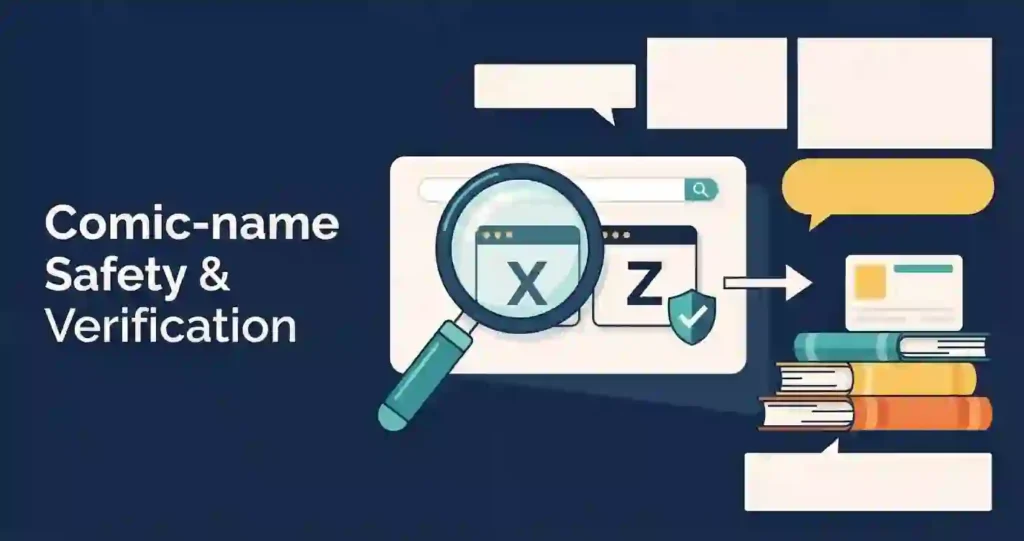
You type one letter wrong, and a comics search turns into a maze of lookalike domains, adult labels, pop-ups, and unclear ownership. That confusion costs time and can put your data, your device, and young readers at risk. This guide gives you a straight answer about ILikeComiz, shows you how to check any comic site, and points you toward licensed reads that pay creators.
Chapter Detail Table: What You Will Learn
| Chapter | Chapter label | Reader question | Direct answer | Support in the chapter | Entity group | Action |
|---|---|---|---|---|---|---|
| 1 | Who Wrote This, How I Checked It, and Why | Who stands behind this guide? | A named byline, a dated check, and three official sources support the page. | Trust box, source rule, correction promise | Author, source, expertise | Add your real byline before publishing |
| 2 | Chapter Detail Table | What does each section cover? | Every chapter answers one question and gives one clear next step. | Question, answer, support, entity, action columns | Pillar page, search intent | Use the table as a reading map |
| 3 | What Does the Name Mean? | Why do readers type this phrase? | Readers often mix close spellings when they want free comics online. | Spelling logic, search intent, plain-language definition | Comic, comix, typo, query | Check the exact letters before clicking |
| 4 | Real Site, Typo, or Lookalike? | Does the exact name name a verified service? | My check found no official owner page or licensing statement for the exact z spelling. | First-hand check, missing-signal list, adult-label note | Lookalike domain, domain record, age label | Treat it as unverified, not proven |
| 5 | Two-Minute Domain Check | How can I judge any similar page? | Check spelling, ownership clues, age labels, permissions, and browser warnings. | Step table, HTTPS note, stop rules | Browser, HTTPS, privacy policy | Leave when two signals fail |
| 6 | Before You Click a Comic Link | What should I refuse on the page? | Refuse downloads, notification prompts, card requests, and surprise logins. | Red-flag bullets, family example, safe routine | Malware, phishing, pop-up ad | Close the tab and reopen from a known source |
| 7 | Children and Teens | Is an unverified comic page right for young readers? | No. Choose age-rated, moderated, or library-based reading instead. | Adult-label explanation, parent checklist, safer paths | Age gate, library app, publisher catalog | Set up a child-friendly service |
| 8 | Copyright Basics for Readers | Does free access remove creator rights? | No. Copyright starts when an author fixes an original work, and the owner controls key uses. | Circular 1 facts, public-domain note, license test | Creator, publisher, copyright, license | Ask who gave permission |
| 9 | Licensed Platforms vs. Unverified Archives | What changes when a platform has permission? | A licensed platform names rights, credits creators, and offers a stable route to support. | Comparison table, proof checklist, fair-pay note | Subscription, digital library, webcomic site | Pick one lawful source today |
| 10 | Legal Comic Options | Where can different readers start? | Reader need decides the best route: samples, library apps, shops, or subscriptions. | Needs table, availability note, cost clarity | Manga, graphic novel, comic shop | Match your budget and device |
| 11 | Protect Your Data | Which habits keep accounts safe? | Updated software, unique passwords, two-factor authentication, and careful clicks. | FTC-based checklist, payment steps, recovery steps | Password, two-factor authentication, browser | Turn on two-factor authentication |
| 12 | Judge Content Quality | How do I spot a good reader? | Clear credits, stable pages, readable art, honest ads, and visible contact details. | Quality table, creator-credit note, accessibility point | Chapter list, scan quality, mobile reader | Reward pages that credit creators |
| 13 | Payment or Download Request | What do I do when a page demands action? | Stop, close the tab, protect accounts, and check your payment record. | Numbered response, evidence list, report note | Card data, fake invoice, extension | Change any reused password |
| 14 | Creators and Publishers | How can rights holders reduce confusion? | Publish clear naming, license terms, official routes, and fast corrections. | Brand checklist, reader education, takedown note | Brand, takedown notice, official catalog | Add a plain “where to read” page |
| 15 | Entity and Language Map | Which related subjects belong here? | An entity means any named person, brand, topic, or organization linked to the subject. | Entity table, glossary, semantic terms | Brands, topics, public bodies | Use these terms consistently |
| 16 | Questions an Answer Engine Should Quote | Which short answers deserve a snippet? | Six direct answers cover identity, safety, copyright, family use, and action. | Quote-ready table with source markers | Search intent, answer block | Keep answers short and factual |
| 17 | Topical Map | What should this pillar connect to? | Twelve supporting topics turn one question into a complete reading library. | Cluster table, intent, format, entity group | Pillar page, supporting content | Build the clusters in plain titles |
| 18 | Frequently Asked Questions | What do readers ask most often? | Six short answers remove doubt without repeating hype. | Six question-and-answer pairs | FAQ, short answer | Send the checklist, not a bare name |
| 19 | What Should You Do Next? | What action should I take now? | Check the spelling, choose a licensed source, and share the method. | Three-step action, reader invitation | Community, librarian, friend | Try one legal read and tell someone |
| 20 | Sources and Review Notes | Which sources support the facts? | Three official primary documents support rights, safety, and editorial method. | Source table, review date, correction note | Copyright Office, FTC, Search Central | Recheck names and dates on update |
What Does ILikeComiz Mean, and Why Do People Search It?
Short answer: The phrase looks like a playful comic-name spelling built from “I like” and a shortened form of “comics.” Readers who hunt for free digital comics often swap letters, drop letters, or copy a name from memory. One changed letter creates a new search phrase even when no official brand stands behind it.
I treat the name as a search entity, not a confirmed company. An entity means any named thing connected to a topic: a person, a brand, a subject, a public body, or even a spelling variant. That small definition keeps this guide honest, because a search result can look official while the owner stays hidden.
Question: Is ILikeComiz a verified comic publisher?
Answer: No. My check found no official owner page or licensing statement for the exact spelling, so ILikeComiz works best as a search phrase, not a confirmed brand.
Readers usually want one of four things when they type a name like this. They want a free chapter, a full series, a safe place to read on a phone, or a quick answer about a confusing result. This page answers all four needs before it sends anyone to a catalog.
- Name intent: The reader wants to know what the words mean.
- Navigation intent: The reader wants the correct address, not a copy.
- Safety intent: The reader wants to know what happens after a click.
- Rights intent: The reader wants comics without hurting creators.
Is ILikeComiz a Real Site, a Typo, or a Lookalike Domain?
The direct answer: I could not verify the exact z spelling as a named publisher with an owner page, a contact route, and a licensing statement. A close x spelling does exist as a domain whose own page copy labels its material adult-only. That difference matters before a child, a parent, or a casual superhero fan clicks anything.
During my check on 3 November 2026, I searched the exact spelling and tried to open its likely address. I found no clear official About page, contact page, or rights statement that I could confirm. I also opened the close-spelling page and saw the adult label in its own description. I call that unverified, not guilty, because missing evidence is not proof of wrongdoing.
Lookalike domains often use one changed letter, one extra letter, or a different ending. A reader who remembers a name by sound can land on a page built for a different audience. Search engines can also surface typo pages, discussion pages, and unrelated brand names around the same phrase.
| Signal I checked | What I found for the exact z spelling | What that means for you |
|---|---|---|
| Owner page | None I could verify | You cannot tell who stands behind the name |
| Contact route | None I could verify | You have no clear path for questions or corrections |
| License statement | None I could verify | You cannot confirm permission for the comics |
| Age label | None I could verify | You cannot assume the page suits young readers |
| Close-spelling page | Its own copy labels adult material | Check the letters before you open any result |
A missing page does not prove a site is fake. It simply leaves a careful reader without enough evidence to trust the name. I ignore third-party traffic guesses and mystery scores because they do not answer the four questions above.
How Can You Check Any Similar Domain in Two Minutes?
Answer first: Use five checks before you read a single page: spelling, ownership clue, age label, permission clue, and browser warning. Two failed checks give you a clear reason to leave. You do not need a paid tool or a technical background.
Start with the address bar. Read it slowly, letter by letter, and compare it with the name you meant to type. A padlock or HTTPS prefix tells you the connection uses encryption; it does not tell you who owns the site or whether the comics have permission.
| Step | What you do | Good sign | Stop sign |
|---|---|---|---|
| 1 | Read every letter in the address | The spelling matches a known publisher or library | One swapped, doubled, or missing letter |
| 2 | Find an About or contact page | A real organization names itself and offers a route | No owner, no address, no support route |
| 3 | Look for age and content labels | Clear ratings and family guidance | Adult labels with no warning or mixed catalogs |
| 4 | Look for a rights or license note | The page names publishers, creators, or permission | “Free” claims with no source for the work |
| 5 | Watch the browser | One clean page loads | A warning, redirect chain, or forced permission |
Next, ask a plain question: Who gave this page the right to show these comics? A lawful service can answer with a publisher deal, a creator upload, a library agreement, or a public-domain note. A vague “all comics are free” line answers nothing.
Keep your check short on purpose. A safe decision should take two minutes, not twenty. When a page pushes you to hurry, that pressure gives you one more reason to slow down.
What Should You Do Before You Click a Comic Link?
Answer first: Refuse anything that asks for a download, a browser extension, a notification permission, or payment details before you see a comic. A reading page needs a browser, a screen, and your attention. It does not need control of your device.
Picture a phone reader who taps a result, sees a “continue” button, and gets a prompt to install a special viewer. The smart move takes one second: close the tab. A real comic page shows pages inside the browser or inside an app you chose from an official store.
- Do not install a viewer that arrives from a pop-up.
- Do not allow notifications from a page you do not know.
- Do not enter a card number to prove your age or unlock a free chapter.
- Do not reuse a password on a site with no owner page.
- Do not open a file that claims to be a comic archive from a stranger.
The Federal Trade Commission tells people to avoid links and attachments in unexpected messages, keep software updated, use strong unique passwords, and turn on two-factor authentication [2]. Those habits also help when a questionable page appears in search results. Good safety does not depend on one magic tool; it depends on a repeatable routine.
If a friend sends a bare name, ask for the full context instead of tapping the first result. Send the five-step check from the previous chapter with the name. That small habit turns a confusing search into a calm decision.
Is ILikeComiz Safe for Children and Teens?
Short answer: No unverified or adult-labeled comic page belongs in a child’s reading routine. Parents and teachers should choose age-rated catalogs, moderated webcomic platforms, public library apps, or publisher pages that state their audience. Clear labels beat hopeful guesses.
An adult label changes the task completely. A page can load fast and still show material a family never wanted. Age gates also vary: some ask for a birth date, others simply display a button, and neither approach proves that the catalog fits a young reader.
| Reader | Better route | What an adult should check |
|---|---|---|
| Young child | Library app or publisher’s family catalog | Age rating, account settings, and ad policy |
| Teen | Moderated webcomic platform or school library | Content tags, reporting tools, and creator credits |
| Adult | Licensed subscription, shop, or library service | Catalog fit, price, and device support |
| Whole family | Print comics or a shared digital library list | Clear titles, simple rules, and shared picks |
Parents can set up one safe source before a child searches alone. Save the exact name in a note, turn on device-level filters, and explain why one changed letter matters. Children understand the rule quickly when you show them two addresses side by side.
Teachers and librarians can go one step further. They can build a short list of approved catalogs and teach the five-step check as a mini lesson. That lesson gives students a skill they can use on any topic, not just comics.
What Does Copyright Mean for Comic Readers?
Answer first: Copyright gives creators control over copies, distribution, adaptations, and public display of their original work. The U.S. Copyright Office says protection begins when an author fixes an original work in a tangible form, and it lists literary works plus pictorial and graphic works among protected categories [1]. Comics fit both categories because they join words and drawings.
The same circular explains that an owner can reproduce a work, prepare derivative works, distribute copies, and authorize others to do those things [1]. A publisher, a library, or a reading app can receive permission through a license. That permission explains why a paid subscription, a library loan, or an official free sample can exist without guesswork.
| Comic part | Why it matters | Plain example |
|---|---|---|
| Story text | Original writing gains protection when fixed | Dialogue, captions, and plot |
| Artwork | Original drawings gain protection when fixed | Panels, character designs, and covers |
| Arrangement | The chosen order can form a protected whole | Issue layout and chapter sequence |
| Translation | A new language version needs permission | A licensed manga edition |
| Public-domain work | No active copyright covers that work | An old story whose status you confirmed |
Three reader rules keep this simple. Free to read does not mean free to copy. Owning a printed issue does not give you the copyright, a point the Copyright Office states directly [1]. Public domain means you can use a work freely, but you must confirm its status rather than assume it [1].
I cannot see a private license agreement from the outside. For that reason, I do not label any specific page illegal here; I ask for proof of permission instead. That standard protects both readers and the artists who spend months making each page.
Laws outside the United States use their own rules and exceptions. Treat this section as a clear starting point, not a court opinion. When money, publication, or reuse enters the picture, ask a qualified legal professional in your country.
How Do Licensed Comic Platforms Differ From Unverified Archives?
Answer first: A licensed platform makes permission visible, credits the people behind the work, and gives readers a stable way to support it. An unverified archive leaves the rights question open and asks readers to accept “free” as the whole answer. The difference shows up in trust, not just in price.
Look for a catalog page that names publishers, creators, or upload partners. Look for terms that explain what you can read, save, and share. A steady address, a privacy note, a contact route, and a correction path also help readers judge the service.
| Feature | Licensed platform | Unverified archive | Why readers care |
|---|---|---|---|
| Rights note | Names permission or owner | Rarely explains the source | You know creators can benefit |
| Creator credit | Lists writers and artists | Often missing or inconsistent | You can find more work you enjoy |
| Catalog stability | Titles stay in one place | Pages move or vanish | Bookmarks keep working |
| Ads | Clear, limited, or absent | Frequent pop-ups and redirects | Fewer traps for your device |
| Support | Contact and help pages | No clear route | Problems get fixed |
| Age guidance | Ratings and filters | Mixed or missing | Families can choose safely |
A lawful read does more than follow a rule. It sends a signal that a story has value, which helps publishers fund new issues and helps independent creators keep posting. That reward feels better than a free page that disappears tomorrow.
This distinction also keeps search results honest. A page can answer “what is this name?” without pretending to know a site’s private contracts. Clear wording builds trust with readers and with the sources that quote short answers.
Which Legal Comic Options Fit Different Readers?
Answer first: Match the option to your need, not to a single hype-filled label. A sample suits a curious reader, a library app suits a careful budget, and a subscription suits a fan who wants a deep catalog. Print shops still serve collectors who want paper in hand.
Availability changes by country and by title, so check the current catalog before you pay. Look for a clear price, a cancellation route, device support, and an age rating. A good service answers those questions before it asks for an account.
| Reader need | Sensible option | What to check | Why it helps |
|---|---|---|---|
| Try one story | Publisher sample or official free chapter | Creator name and series page | You test the art before spending |
| Read many issues | Publisher subscription or licensed comic app | Monthly price, catalog, offline rules | You get depth with clear permission |
| Spend nothing | Public library digital app | Library card rules and holds | You borrow through a known institution |
| Follow new webcomics | Creator-owned site or moderated platform | Uploader identity and content tags | You support the person making the page |
| Collect paper | Local comic shop or publisher store | Edition, shipping, return policy | You own a physical copy |
| Read older works | Public-domain archive or library scan | Rights status and scan source | You avoid guessing about old titles |
Brand names that readers often meet include Marvel Unlimited, GlobalComix, WEBTOON, Hoopla, Libby, Kindle, and local comic shops. I name them as entities, not as endorsements or as sources for this article. Check each catalog yourself, because a brand can change its list, price, or regional access.
When ILikeComiz leads you toward a result with no rights note, use this table as a fork in the road. Pick one row, open that kind of service, and search for the title again. One calm minute often reveals a cleaner copy than the first result.
How Can You Protect Your Data on Any Comic Site?
Answer first: Keep software current, use a unique password for every account, turn on two-factor authentication, and refuse surprise downloads. The FTC gives the same core advice for personal information and account safety [2]. These steps work because they limit damage even when a page misbehaves.
Start before you click. Update your browser, operating system, and security software; turn on automatic updates where your device offers them [2]. Choose a long passphrase made of random words, and let a password manager remember it [2]. Add two-factor authentication so a stolen password alone cannot open your account [2].
| Habit | What you do | What it blocks |
|---|---|---|
| Update software | Install browser and system patches | Known weaknesses that criminals target |
| Unique password | Use a different passphrase per account | One leak opening every other account |
| Two-factor authentication | Require a second sign-in factor | Remote login with a stolen password |
| Careful clicks | Skip unexpected links and attachments | Phishing pages and harmful downloads |
| Payment check | Review statements after any charge | Silent or repeated billing |
| Quick recovery | Change reused passwords at once | A small mistake becoming a long problem |
Treat card requests with extra care. A page that asks for payment to unlock “free” comics has already broken the promise it made. Use a payment method with clear dispute rules, and contact the provider quickly if a charge looks wrong.
If you already typed a password, change that password everywhere you reused it. Turn on two-factor authentication, sign out of other sessions, and watch your account activity for a few days. A fast response beats a perfect plan you never started.
How Do You Judge Content Quality and Reading Experience?
Answer first: Judge a reader by clarity, credit, and control. Clear chapter order, readable art, honest ads, and visible creator names show respect for the work. A page that hides those basics asks you to accept a poor trade.
Speed matters, but speed alone proves nothing. A fast page can still show blurry scans, mixed chapter order, or a button that opens three new tabs. Good design helps you read, not hunt.
| Quality signal | What good looks like | What poor looks like |
|---|---|---|
| Credits | Writer, artist, publisher, or uploader named | No human name anywhere |
| Chapter order | Numbered list with dates | Random titles and missing issues |
| Image quality | Sharp pages that fit your screen | Cropped text or stretched art |
| Ads | Labeled, limited, easy to close | Pop-unders, fake buttons, redirect loops |
| Navigation | Back, next, and search work | Traps that block the back button |
| Access | Mobile, desktop, and readable text | Forced app or tiny fixed images |
| Accountability | Contact, privacy, and correction notes | No way to report a mistake |
Creator credits deserve special attention. When a page names the writer and artist, you can find more of their work through lawful channels. When a page strips names away, it turns a creative team into anonymous content.
Accessibility also belongs in the judgment. Captions, zoom that keeps text sharp, sensible contrast, and keyboard-friendly controls help more readers. A service that invests in those details usually invests in rights and support too.
What Should You Do If a Page Asks for Payment or a Download?
Answer first: Stop the session, close the tab, and protect the accounts you used. Do not negotiate with a pop-up, and do not install a “special reader” from an unknown page. Keep your evidence short and useful.
Use this order when something feels wrong:
- Close the tab without clicking the final confirmation button.
- Decline the download and delete any file that arrived without your clear request.
- Change any password you typed, starting with email and payment accounts.
- Turn on two-factor authentication for those accounts [2].
- Check your bank or card record for a new or repeated charge.
- Write down the page name, date, and prompt while the detail stays fresh.
- Tell the payment provider or a consumer-protection agency if money moved.
- Warn one person who searches for the same comic name.
A screenshot can help, but never save a page that asks for private data just to collect proof. Your notes already give you the facts you need. Short, calm records support a faster report than a folder of confusing captures.
The FTC also warns that unexpected links and attachments can deliver harmful software or lead to fake sign-in pages [2]. That advice fits a comic search as well as an inbox. You often stay safest when you never make the click.
How Can Creators and Publishers Respond to Lookalike Domains?
Answer first: Make the official route easier to find than any imitation. Publish a clear brand spelling, a plain “where to read” page, visible license terms, and a fast correction process. Confusion shrinks when readers can confirm a name in one glance.
Rights holders can take practical steps without shouting at readers. Clear naming, consistent catalog pages, and useful support notes prevent most mistaken visits. A short public guide also helps journalists, librarians, and search features repeat the right facts.
- Publish one official spelling and use it in every title, cover, and catalog entry.
- List approved reading places in plain words, with current regional notes.
- Explain license basics so readers know why a library or subscription is lawful.
- Name a contact route for corrections, rights questions, and broken credits.
- Keep an age-rating key beside catalog entries for families.
- Send proper takedown notices when a page uses protected work without permission.
- Teach the five-step check instead of telling fans to “be careful” with no method.
Publishers should also fix their own metadata. A clear title, creator list, release date, and series order give readers and search systems reliable anchors. That work supports the whole comic ecosystem, from a first sample to a collected edition.
Independent creators gain the most from a simple official page. One page with their name, their series list, and their approved platforms can outrank rumors over time. Clear facts travel farther than an angry warning.
What Entities and Terms Belong to This Topic?
Answer first: An entity means any named person, brand, topic, organization, or public body connected to the subject. This map keeps the pillar page precise and gives related subjects a shared language. It also stops one misspelled word from swallowing unrelated comic brands.
| Entity or term | Plain meaning | Related subjects |
|---|---|---|
| ILikeComiz | The exact search phrase this pillar explains | Lookalike spellings, search intent, name checks |
| Comic | A story told through panels, words, and art | Issue, series, graphic novel, strip |
| Comix | An alternative spelling often used in adult or underground contexts | Spelling variant, catalog label |
| Manga and webcomic | Comic formats with their own publishing routes | Chapter, creator platform, translation |
| Publisher | The organization that releases and licenses a work | Catalog, edition, rights note |
| Creator | The writer, artist, or team behind the work | Credit, royalty, official page |
| Copyright | The legal control of original expression | Reproduction, distribution, adaptation |
| License | Permission from the rights owner | Subscription, library loan, official sample |
| Public domain | A work with no active copyright | Rights check, archive, reuse |
| Lookalike domain | An address that imitates a known name | Typo, swapped letter, redirect |
| HTTPS | Encryption for data in transit | Browser padlock, not ownership proof |
| Phishing | A trick that steals account or payment data | Fake login, urgent prompt, unexpected link |
| Malware | Harmful software delivered by a page or file | Forced download, fake viewer |
| Age gate | A warning or check for mature material | Family safety, rating, moderation |
| Library app | A borrowing service tied to a real library | Library card, holds, digital loan |
| U.S. Copyright Office | The public body behind Circular 1 | Copyright basics, protected categories |
| Federal Trade Commission | The public body behind consumer safety guidance | Passwords, updates, two-factor authentication |
| Google Search Central | The public body behind people-first publishing guidance | Who, how, why, trust signals |
| Marvel Unlimited, GlobalComix, WEBTOON, Hoopla, Libby, Kindle | Example brands readers compare | Catalogs, apps, regional access |
Semantic terms that belong naturally beside the main phrase include digital comics, free comic reading, online comic reader, copyright permission, licensed catalog, creator credit, adult label, safe browsing, browser warning, account security, library card, mobile reader, graphic novel, chapter list, and publisher sample. These words help a reader understand the topic; they do not need repetition in every paragraph.
Use one term for one idea. Call a changed letter a lookalike domain, not a virus. Call a missing license note unverified permission, not a crime. Precise words make the page calmer, clearer, and more useful.
Which Questions Should an Answer Engine Quote?
Answer first: Short answers work best when they name the subject, give the direct result, and stop. The six lines below stay quotable because each one answers a real reader question without extra padding. Each line also points to the kind of evidence behind it.
| Reader question | Direct answer a short-answer box can quote | Evidence type |
|---|---|---|
| Is the exact z spelling a verified publisher? | No. A direct check found no owner page, contact route, or licensing statement for the exact z spelling, so readers should treat it as an unverified search phrase. | First-hand page check |
| Does HTTPS prove a comic site is trustworthy? | No. HTTPS encrypts the connection; it does not identify the owner or prove that the comics have permission. | Consumer-safety basics [2] |
| Does “free” remove copyright? | No. U.S. copyright begins when an author fixes an original work, and the owner controls copying, distribution, and adaptation unless permission or an exception applies [1]. | Copyright Office [1] |
| Is an unverified comic page suitable for children? | No. Adult labels, weak age gates, and unclear ownership make age-rated library or publisher catalogs the safer choice. | Age-label reasoning |
| What should a reader do first? | Read the address letter by letter, look for ownership and rights clues, and leave when two checks fail. | Five-step method |
| Why name sources and methods? | Clear authorship, direct checking, and primary sources help readers judge trust, which matches people-first publishing guidance [3]. | Search Central [3] |
A good answer does not hide uncertainty. It says what the writer saw, names what the writer could not verify, and gives the next action. That shape serves a human reader and a short-answer box at the same time.
Topical Map: What Should This Pillar Connect To?
Answer first: This page works as the central reference. Twelve supporting topics can answer narrower questions without competing with it. Each title below stays plain text, as this guide uses no links.
| Cluster title | Primary question | Search intent | Best format | Entity group |
|---|---|---|---|---|
| Comic Name Spelling Check | How do I compare similar comic-site names? | Navigation | Step list and comparison table | Lookalike domain, typo |
| Safe Comic Reading on a Phone | Which phone habits prevent bad downloads? | Safety | Checklist with stop signs | Browser, app store, malware |
| Copyright for Comic Fans | What can a reader copy or share? | Rights | Plain-language rules and examples | Creator, publisher, license |
| Public Domain Comics Explained | Which older comics can I read freely? | Rights | Status-check guide | Archive, rights status |
| Licensed Comic Apps Compared | How do subscriptions differ by catalog? | Commercial | Needs table | Subscription, regional access |
| Free Comics Through a Library Card | How does digital borrowing work? | How-to | Numbered setup guide | Library app, holds |
| Age Ratings for Digital Comics | How do families choose suitable titles? | Family | Rating key and parent checklist | Age gate, moderation |
| Creator Credits and Why They Matter | How do credits lead to lawful reads? | Informational | Short explainer with examples | Writer, artist, catalog |
| Phishing Signs on Entertainment Sites | How do I spot a fake login or invoice? | Safety | Red-flag table | Password, payment data |
| HTTPS, Padlocks, and Real Trust | What does a padlock actually prove? | Informational | Myth-versus-fact table | Encryption, ownership |
| How to Report a Bad Comic Page | Who hears a consumer complaint? | Action | Ordered response list | Payment provider, agency |
| Build a Family Comic Reading List | How do we share safe picks? | Community | Shared list template | Librarian, teacher, family |
These clusters give every related question a home. The pillar keeps the broad answer, while each supporting page can add fresh examples, local rules, or a current catalog check. That structure builds topical authority without repeating one phrase on every page.
Frequently Asked Questions About ILikeComiz
1. Is ILikeComiz a real, verified comic service?
Answer: I found no official owner page, contact route, or licensing statement for the exact z spelling in my check. Treat ILikeComiz as an unverified search term, not a confirmed publisher.
2. Can I read comics online without paying?
Answer: Yes. Publisher samples, library apps, and creator-approved free chapters offer lawful free reading. “Free” describes the price to you; it never removes the creator’s rights [1].
3. Can a lookalike domain harm my phone?
Answer: A deceptive page can push downloads, notification prompts, or fake login forms. Updated software, careful clicks, unique passwords, and two-factor authentication cut that risk sharply [2].
4. Does a padlock mean a comic site is safe?
Answer: No. A padlock shows that the connection uses encryption. It does not name the owner, rate the content, or prove that a publisher granted permission.
5. How do I support comic creators?
Answer: Buy official editions, use licensed subscriptions, borrow through libraries, and share publisher-approved previews. Each lawful read tells the market that the work matters.
6. Should I send ILikeComiz search results to friends?
Answer: Send the five-step safety checklist instead. A bare name can lead someone to the wrong page with no context, while the checklist gives them a calm way to decide.
What Should You Do After an ILikeComiz Search?
Check the exact spelling before you click. Choose one licensed source today, open a sample, and notice how simple legal reading feels on your phone or laptop. If a page misled you, write down what happened and tell a friend, a librarian, or your site editor.
Use ILikeComiz as a question, not a shortcut. When you turn confusion into a quick check, you protect your data, respect creators, and keep comics fun for the next reader. Share this guide with one person who searches for comics on a phone, then ask which official catalog they tried.
Small actions add up. One careful reader teaches another, one lawful read supports a creator, and one clear correction cleans up a messy search result. Start with the five-step check, pick your first lawful chapter, and tell someone what you found.