What Is Yosuga no Sora Anime? Complete Story, Route, and Episode Guide
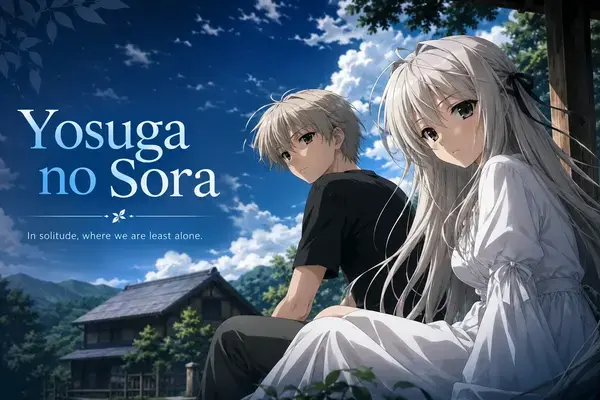
Watching a visual novel anime adaptation often leaves you puzzled by sudden timeline resets, vanishing character arcs, and stories that seem to contradict themselves every few episodes. You pause, rewind, and still feel lost about which events actually count.
This complete breakdown of the Yosuga no Sora anime eliminates that confusion entirely. Below, you will find every character route mapped out, the omnibus timeline mechanics fully explained, and practical information about where to stream the series legally — all organized in a clear, episode-by-episode structure.
What Is the Yosuga no Sora Anime? Origin and Overview
The Yosuga no Sora anime (In Solitude, Where We Are Least Alone) is a 12-episode television series that aired during Japan’s autumn 2010 broadcast season. Studio feel. produced the adaptation under the direction of Takeo Takahashi, who previously earned acclaim for directing Spice and Wolf.
The show adapts the 2008 adult visual novel created by Japanese game developer Sphere. That original game offered players multiple branching romantic storylines, each tied to a specific heroine.
Full Japanese Title: ヨスガノソラ — In Solitude, Where We Are Least Alone
Studio: feel.
Director: Takeo Takahashi
Episodes: 12
Original Air Date: October 4 – December 20, 2010
Source Material: Sphere Visual Novel (2008)
The story follows twin siblings Haruka Kasugano and Sora Kasugano, who lose both parents in a sudden automobile accident. Seeking stability and escape from grief, the twins relocate to their late grandparents’ rural home in the secluded village of Okukozome-chou. There, Haruka reconnects with childhood friends and encounters new neighbors, setting multiple emotional story arcs into motion.
If you appreciate anime adaptations of visual novels, our guide to reading manga source material covers how original stories transform across different media formats.
Understanding the Omnibus Route Format in Anime Adaptations
Standard romantic anime typically follow a single, linear storyline where the protagonist selects one romantic interest by the final episode. The Yosuga no Sora anime breaks this convention completely by adopting a rare omnibus format — a parallel world structure that mirrors the multi-route mechanics of dating simulation games.
Instead of blending every heroine into one cluttered harem narrative, the anime resets the timeline at critical turning points.
Step 2: Haruka makes a pivotal choice → locks into a specific route
Step 3: That heroine’s emotional arc reaches resolution
Step 4: Timeline rewinds to the common route
Step 5: Haruka explores a completely different relationship
Step 6: Repeat until all routes are covered
This approach preserves the emotional integrity of each character arc exactly as the Sphere visual novel originally intended. No heroine is sidelined or reduced to background decoration — each receives her own self-contained narrative with a beginning, climax, and resolution.
The omnibus format remains uncommon in anime. The most popular comparison is Amagami SS, which used the same structure with lighter, more comedic tones. Understanding this format is essential before watching the Yosuga no Sora series, because without that context, the sudden episode resets feel disorienting and confusing.
Complete Yosuga no Sora Episode Guide by Character Route
To watch the series with full comprehension, you need to understand exactly how the 12 broadcast episodes divide into distinct narrative chapters. Each arc stands alone as a separate parallel timeline.
├── Kazuha Migiwa Arc (Episodes 3–4)
├── Akira Amatsume Arc (Episodes 5–6)
├── Nao Yorihime Arc (Episodes 7–9)
└── Sora Kasugano Arc (Episodes 10–12)
Episodes 1–2 The Common Foundation
- Episode 1 — “Distant Memories”: Haruka and Sora arrive at Okukozome village. Haruka reunites with his energetic neighbor Nao and meets local shrine maiden Akira, wealthy heiress Kazuha, and class representative Motoka. The rural setting and summer atmosphere are established through cicada sounds, lush greenery, and dusty country roads.
- Episode 2 — “Akira Embarrassed”: Daily life in the village settles in. Haruka adjusts to his new high school while Sora stays home, withdrawing into her computer and refusing to socialize. Local village traditions and shrine festivals provide background context for later arcs.
Episodes 3–4 Kazuha Migiwa Route
- Episode 3 — “Hesitation at Twilight”: The timeline branches as Haruka grows closer to Kazuha. He discovers her personal struggles with her wealthy family’s social expectations and her strained relationship with her controlling father.
- Episode 4 — “Haruka’s Heart”: Haruka supports Kazuha in confronting her family pressure, leading to an optimistic emotional resolution. Their bond solidifies before the timeline resets for the next arc.
Episodes 5–6 Akira Amatsume Route
- Episode 5 — “Darkness Revealed”: The story resets to the village festival. Haruka uncovers the complicated domestic situation surrounding Akira and her biological connection to Kazuha’s family. Themes of identity and belonging emerge.
- Episode 6 — “I Won’t Give Up”: Haruka helps Akira work through her family isolation and feelings of illegitimacy. The resolution emphasizes community acceptance and personal courage.
Episodes 7–9 Nao Yorihime Route
- Episode 7 — “Guilt and Innocence”: The timeline rewinds to explore the childhood history between Haruka and Nao. Unresolved promises and a painful shared memory create tension between the two characters.
- Episode 8 — “Darkened Sky”: Nao struggles with deep remorse over a past mistake. Sora’s visible resentment toward Nao intensifies, adding a layer of sibling conflict.
- Episode 9 — “Untangled Thread”: Haruka and Nao directly address their emotional trauma and childhood guilt. Their arc reaches a bittersweet but healing conclusion. This is the longest character route in the series, spanning three full episodes.
Episodes 10–12 Sora Kasugano Route
- Episode 10 — “Bird in a Cage”: The final and most controversial arc shifts focus entirely to the codependent relationship between Haruka and his twin sister Sora. The emotional dependency that was hinted at throughout the common route becomes the central narrative.
- Episode 11 — “Distant Solitude”: The twins face intense psychological strain, growing social isolation from their classmates, and crushing guilt as their relationship crosses emotional boundaries.
- Episode 12 — “To the Distant Sky”: Confronted with community rejection, Haruka and Sora leave Okukozome village behind. The series concludes with a deliberately ambiguous, emotionally heavy finale that divided audiences worldwide.
For similar deep-dive episode analysis of controversial anime storylines, check out our Tokyo Ghoul manga vs anime differences breakdown.
Yosuga no Sora Route Comparison and Overview Table
| Route | Primary Heroine | Episodes | Core Theme | Resolution Tone | Episode Count |
|---|---|---|---|---|---|
| Route 1 | Kazuha Migiwa | 3–4 | Social expectations, family pressure | Optimistic & Uplifting | 2 |
| Route 2 | Akira Amatsume | 5–6 | Identity, belonging, illegitimacy | Warm & Reassuring | 2 |
| Route 3 | Nao Yorihime | 7–9 | Past guilt, atonement, childhood nostalgia | Bittersweet & Reflective | 3 |
| Route 4 | Sora Kasugano | 10–12 | Grief, codependency, taboo drama | Melancholic & Open-Ended | 3 |
Key Characters in the Yosuga no Sora Anime
The Yosuga no Sora characters drive the psychological tension that separates this series from typical visual novel adaptations. Each character carries genuine emotional baggage rather than functioning as a shallow archetype.
| Character | Voice Actor | Role | Key Traits | Associated Route |
|---|---|---|---|---|
| Haruka Kasugano | Hiro Shimono | Protagonist | Gentle, passive, grief-stricken | All Routes |
| Sora Kasugano | Hiroko Taguchi | Twin Sister | Reclusive, possessive, emotionally fragile | Episodes 10–12 |
| Nao Yorihime | Yuka Inokuchi | Childhood Neighbor | Guilt-ridden, caring, deeply nostalgic | Episodes 7–9 |
| Kazuha Migiwa | Ryoko Ono | Wealthy Heiress | Refined, protective, socially pressured | Episodes 3–4 |
| Akira Amatsume | Mai Nakahara | Shrine Maiden | Cheerful exterior, hidden sorrow | Episodes 5–6 |
| Motoka Nogisaka | Tae Okajima | University Student / Maid | Comedic relief, warm-hearted | Omake Segments |
Haruka Kasugano — The Reluctant Protagonist
Haruka is a quiet, emotionally reserved high school student who processes grief by focusing outward on the needs of others rather than addressing his own pain. His passive nature makes him susceptible to emotional manipulation, which becomes the central dramatic tension of every arc. Voiced by Hiro Shimono (Conny Springer in Attack on Titan), Haruka’s understated performance conveys genuine vulnerability.
Sora Kasugano — The Fragile Twin
Sora carries a signature white stuffed rabbit — a childhood gift from Haruka — that symbolizes her emotional stagnation and refusal to process grief. She remains locked inside their grandparents’ house for most of the series, communicating primarily through her laptop and displaying open hostility toward any girl who gets close to Haruka.
Her character design — silver twintails, Gothic-Lolita dress, and pale complexion — became iconic within the anime merchandise community. High-end figure manufacturers including Alter and Good Smile Company have produced multiple scale figures based on her appearance.
Nao Yorihime — The Guilt-Driven Neighbor
Nao is Haruka’s upperclassman and childhood neighbor. She harbors intense remorse over an encounter she shared with Haruka years before the story begins. Her route spans three episodes instead of the standard two, allowing the anime to explore themes of atonement, forgiveness, and the weight of childhood promises.
Akira Amatsume — The Cheerful Mask
Akira works as a shrine assistant and presents a relentlessly upbeat personality to mask deep personal sorrow. Her arc reveals a complicated biological connection to the Migiwa family, addressing themes of illegitimacy and community belonging that feel unusually grounded for a visual novel adaptation.
For more character-driven anime analysis, explore our complete guide on Satoru Gojo’s character arc and what makes multi-layered anime characters resonate with audiences.
Analyzing the Kasugano Twins’ Narrative Arc
The final three episodes of the Yosuga no Sora anime generated substantial debate within the anime community due to the direct portrayal of a romantic relationship between twin siblings. Director Takeo Takahashi framed this dynamic not as titillation but as a psychological drama rooted in severe trauma and abandonment fears.
Emotional Escalation Path:
Loss of Parents → Severe Grief & Isolation → Unhealthy Emotional Dependency → Inability to Establish Boundaries → Taboo Relationship → Social Ostracization
Sora’s social withdrawal and Haruka’s failure to set emotional boundaries highlight the danger of codependent grief processing. Their shared trauma creates an insular environment where neither twin can distinguish family affection from romantic obsession.
The series deliberately presents this arc with somber, melancholic visual and musical tones rather than celebratory ones. The lake scene in the final episode — where both twins face a moment of existential crisis — forces viewers to confront the consequences of emotional isolation rather than romanticize it.
This narrative approach drew comparisons to literary works exploring forbidden relationships through a psychological lens, similar to how dark manga series treat difficult themes with artistic seriousness rather than shock value.
Studio feel. Production: Animation, Soundtrack, and Art Direction
The technical execution of the Yosuga no Sora anime elevated it far above typical visual novel adaptations of its era. Studio feel. invested in atmospheric direction that remains impressive over a decade later.
Classical Soundtrack by Manabu Miwa and Bruno Wen-li
The musical score relies heavily on classical strings, melancholic cello solos, and gentle piano arrangements. The insert theme “Kioku” (Memory) perfectly mirrors the rural nostalgia and underlying sadness of Okukozome village. Every scene transition uses music to signal emotional shifts rather than relying on dialogue exposition.
Opening Theme: “Hiyoku no Hane” by eufonius
Ending Theme: “Tsunagu Kizuna” by Nekohiki
Insert Song: “Pins” by eufonius
Background Score: Manabu Miwa & Bruno Wen-li
Visual Direction and Environmental Storytelling
Studio feel. used warm, sun-drenched lighting and watercolor-style backgrounds to depict the Japanese countryside. Cicada calls, lush greenery, and weathered Shinto shrines create a pastoral atmosphere that contrasts sharply with the dark, claustrophobic emotional states of the characters.
This visual contrast — bright exterior landscapes paired with interior psychological darkness — mirrors techniques used by acclaimed directors like Makoto Shinkai and Mamoru Hosoda. The environmental storytelling carries substantial narrative weight, reducing the need for heavy-handed dialogue.
Sphere Visual Novel vs. the Anime Adaptation: Key Differences
Adapting a 40+ hour visual novel into a 12-episode anime required significant editorial decisions. Understanding these changes helps fans appreciate both versions on their own merits.
| Element | Visual Novel (2008) | Anime Adaptation (2010) |
|---|---|---|
| Story Length | 40+ hours across all routes | ~5 hours across 12 episodes |
| Internal Monologue | Heavy first-person narration by Haruka | Replaced with visual cues, long pauses, environmental shots |
| Motoka’s Route | Full playable route with romantic resolution | Reduced to short comedic omake segments after each episode |
| Comedic Tone | Balanced mix of comedy and drama | Heavily weighted toward drama and melancholy |
| Player Agency | Player makes active choices at branching points | Viewer passively watches predetermined route selections |
| Kozue Kuranaga | Side character with her own sub-route | Briefly appears without dedicated screen time |
The visual novel sequel Haruka na Sora (2009) expanded on Sora’s route and provided official epilogues for additional characters. The Yosuga no Sora manga adaptations, illustrated by Takashi Mikawa and Misuzu Kura, offer yet another interpretation of the same source material with different pacing and artistic emphasis.
If you want to explore where to read manga adaptations of visual novel stories, our Asura Scans complete guide covers the best platforms for translated manga content.
Cultural Reception, Age Ratings, and Broadcasting History
When the Yosuga no Sora anime aired on AT-X and Tokyo MX in October 2010, it immediately attracted attention from Japanese media review boards and international anime communities alike.
Japanese Broadcasting Ethics Review
Japan’s Broadcasting Ethics & Program Improvement Organization (BPO) received formal complaints regarding the series’ broadcast on late-night television. After review, the BPO concluded that the show’s late-night time slot and content warnings met appropriate broadcast standards. No censorship action was taken.
Western Distribution Timeline
- 2010–2019: Western distributors hesitated to license the series due to its controversial subject matter. Fan-subtitled versions circulated through online communities.
- 2020: Media Blasters licensed the anime for North American physical distribution under their Tokyo Shock label, releasing complete Blu-ray and DVD sets.
- 2021–Present: Limited streaming availability on select platforms with regional restrictions.
Merchandise and Cultural Impact
Despite the controversy, Sora Kasugano became one of the most recognized characters in anime figure collecting. Her Gothic-Lolita dress, silver twintails, and bunny plush became popular subjects for scale figures, nendoroids, and fan art. The Yosuga no Sora bunny plush itself became a sought-after collector’s item, with licensed reproductions selling through Japanese retailers.
According to the MyAnimeList database, the series holds over 300,000 user ratings, placing it among the most discussed visual novel adaptations in the community’s history.
Where to Watch Yosuga no Sora Anime Legally
Streaming availability for the Yosuga no Sora anime varies significantly depending on your region and local content regulations. Always verify current licensing status before purchasing or subscribing.
| Platform | Region | Format | Subtitle Options |
|---|---|---|---|
| Crunchyroll | Select Regions | Streaming | English, varies by territory |
| Media Blasters / Tokyo Shock | North America | Blu-ray / DVD | English Subtitles |
| Anime Digital Network (ADN) | France, Select EU | Streaming | French, German |
| Aniworld / Streaming DE | Germany | Streaming | German Subtitles |
For the most current availability data, cross-reference listings on Anime News Network and the VNDB (Visual Novel Database) entry for the original Sphere game.
Pro Tip: If you cannot find the Yosuga no Sora stream in your region, the Media Blasters Blu-ray release is region-free and includes the complete 12-episode series with English subtitles. Physical media remains the most reliable option for this specific title.
Top Anime Series Similar to Yosuga no Sora
If you appreciate the atmospheric drama, omnibus branching format, or emotional weight of the Yosuga no Sora anime, these five series deliver comparable experiences.
| If You Want… | Watch This | Episodes | Why It Matches |
|---|---|---|---|
| Omnibus Route Format | Amagami SS | 25 | Same multi-route structure, lighter comedic tone |
| Melancholic Romance Drama | White Album 2 | 13 | Grounded emotional devastation among high school musicians |
| Rural Hometown Return | Myself ; Yourself | 13 | Childhood friends dealing with hidden trauma in a small town |
| Complex Relationship Drama | Domestic Girlfriend | 12 | Unconventional romance dynamics with serious emotional stakes |
| Visual Novel Adaptation | Koi to Senkyo to Chocolate | 12 | Multi-heroine political drama adapted from a visual novel by sprite |
For additional recommendations within the action and drama genre, browse our curated list of anime series similar to Jujutsu Kaisen for more intense storytelling.
Yosuga no Sora Manga: Adaptations and Where to Read
The Yosuga no Sora manga exists in multiple versions, each published by Kadokawa Shoten and serialized in different manga magazines.
- Yosuga no Sora (Main Manga) — Illustrated by Takashi Mikawa, serialized in Comp Ace. Follows the primary visual novel storylines with a focus on Sora’s arc.
- Haruka na Sora — A companion manga that expands on alternate character routes and provides additional backstory for supporting cast members.
- Yosuga no Sora 4-Koma — A lighthearted comedic spin-off presented in four-panel comic strip format.
All manga adaptations offer different pacing and artistic interpretations compared to both the anime and the original visual novel. Readers who enjoy comparing adaptations will find meaningful differences in how each medium handles the emotional beats.
Need help finding where to read translated manga legally? Our guide on legal manga reading platforms covers the best options for English-language readers.
Best Watch Order for the Yosuga no Sora Anime
Because the anime uses an omnibus format, you technically can watch the routes in any order after the shared prologue. However, the broadcast order is intentionally arranged to escalate emotional intensity.
Recommended Watch Order (Broadcast Order)
- Episodes 1–2: Common Route — establishes setting, characters, and emotional foundation
- Episodes 3–4: Kazuha Arc — lightest emotional weight, eases you into the format
- Episodes 5–6: Akira Arc — introduces family drama themes with moderate intensity
- Episodes 7–9: Nao Arc — deepest character development, bittersweet resolution
- Episodes 10–12: Sora Arc — heaviest emotional impact, designed as the climactic finale
Alternative Watch Order (For Returning Viewers)
If you have already seen the series once and want a different experience on rewatch:
- Watch the Sora arc first (Episodes 1–2, then 10–12) to understand the emotional core
- Then revisit Nao’s arc (Episodes 7–9) to appreciate the contrast
- Finish with Kazuha and Akira’s arcs for a lighter conclusion
First-time viewers should always follow broadcast order. The escalating emotional weight is deliberate. Watching Sora’s arc first removes the gradual tonal shift that makes the final episodes hit with maximum impact.
Legacy and Influence of the Yosuga no Sora Anime
Over a decade after its original broadcast, the Yosuga no Sora anime continues to generate discussion and influence how the anime community evaluates visual novel adaptations.
Impact on Visual Novel Adaptation Standards
The series demonstrated that the omnibus format could successfully translate multi-route games into coherent television. Studios that later adapted similar visual novels — including Photo Kano (2013) and Seiren (2017) — directly cited the structural approach used in Sora yosuga no as a production template.
Ongoing Community Engagement
- Fan Translation Projects: The original Sphere visual novel received a full English fan translation in 2014, allowing Western audiences to experience the complete unabridged storylines.
- Cosplay and Convention Presence: Sora Kasugano cosplay remains a consistent presence at anime conventions worldwide, particularly in Japan, China, and Southeast Asia.
- GIF and Meme Culture: Specific scenes and reaction images from the series circulate widely across social media platforms, keeping the title visible to new audiences.
- Music Streaming: The eufonius opening theme “Hiyoku no Hane” and the Kioku insert song maintain steady play counts on Spotify and Apple Music, introducing the series to listeners who discover it through J-pop playlists.
The cultural footprint of Yosuga no Sora extends beyond its episode count. It remains a touchstone reference point whenever anime fans debate how to handle controversial source material with artistic seriousness rather than exploitative sensationalism.
For another example of a character whose cultural impact far outweighs their screen time, read our deep dive into Vegeta’s legacy in Dragon Ball.
Frequently Asked Questions About Yosuga no Sora
Why does the story keep resetting in the Yosuga no Sora anime?
The Yosuga no Sora anime uses an omnibus format adapted directly from the visual novel. Every few episodes, the story returns to a central decision point, allowing Haruka to pursue a different heroine in a completely alternate timeline. This preserves the emotional integrity of each character route without forcing all heroines into a single cluttered narrative.
Is Yosuga no Sora based on a manga or a game?
Yosuga no Sora originated as a Japanese visual novel PC game developed by Sphere in 2008. The Yosuga no Sora manga adaptations, illustrated by Takashi Mikawa and Misuzu Kura, were published afterward by Kadokawa Shoten. The anime directly adapts the visual novel rather than the manga versions.
How many episodes are in the Yosuga no Sora anime?
The series consists of exactly 12 television episodes, each approximately 24 minutes long. Short comedic omake segments featuring Motoka Nogisaka are attached to the end of each broadcast episode as bonus content.
What is the significance of Sora’s bunny plush?
The Yosuga no Sora bunny plush was a childhood gift from Haruka to his twin sister. It represents Sora’s inability to move past their family’s tragic history and symbolizes her deep emotional dependence on her brother. She carries it throughout the series as a comfort object tied to her pre-trauma childhood.
Does the Yosuga no Sora anime have a canon ending?
Because the show follows an omnibus structure, each character route represents an equally valid parallel reality. However, the anime deliberately places Sora’s storyline as the final arc (Episodes 10–12), giving it the most prominent narrative weight and emotional climax.
Where can I watch Yosuga no Sora legally?
You can watch Yosuga no Sora through Crunchyroll in select regions, purchase the complete Blu-ray from Media Blasters/Tokyo Shock in North America, or stream through Anime Digital Network in specific European territories. Regional availability changes frequently, so check Anime News Network for the latest licensing updates.
Share Your Perspective
Which Yosuga no Sora character route hit you the hardest? Do you prefer multi-route omnibus adaptations, or do single-timeline romance anime tell stronger stories?
Drop your thoughts in the comments below. If this guide helped you understand the series structure, share it with a friend who has been confused by the timeline resets.
Explore more anime deep dives on Gojo Blog — from Mahoraga’s role in Jujutsu Kaisen to our best anime profile picture gallery.